Many Muslims in Canada want to recite the Quran correctly but feel unsure about Tajweed. You may recognize Arabic letters and read basic words, yet your recitation may not sound smooth or accurate. This is very common for beginners, adults, and even lifelong readers of the Quran.
Tajweed simply means reciting the Quran the way it was revealed. It helps protect the meaning of the words and adds beauty and clarity to recitation. The good news is that Tajweed does not begin with complex rules. It starts with small, easy steps that anyone can learn.
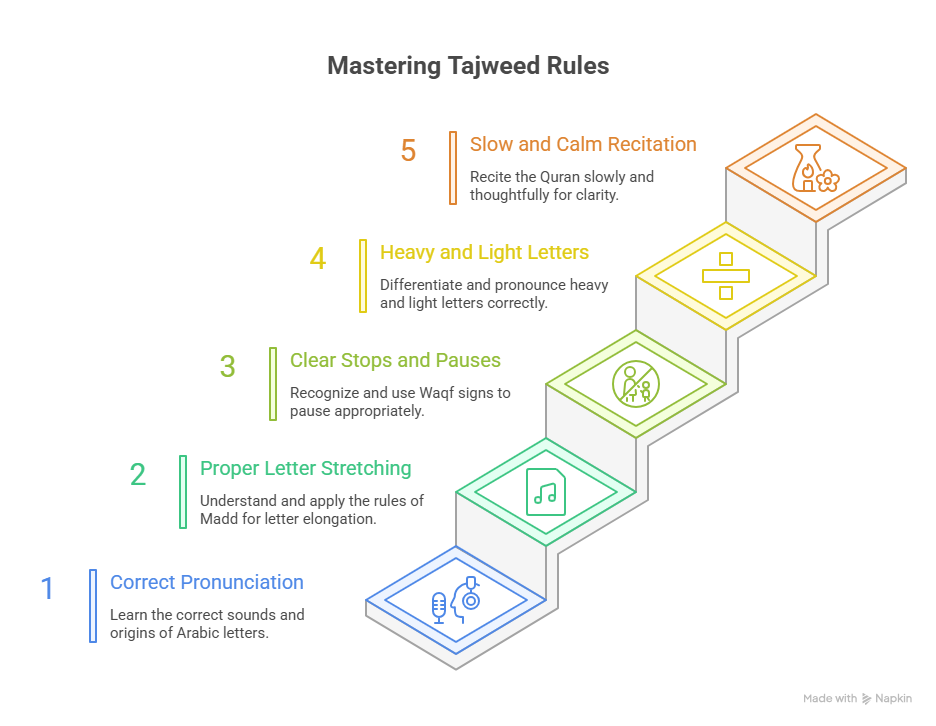
The first and most important rule of Tajweed is correct pronunciation (Makharij). Arabic letters come from different parts of the mouth and throat. Learning these sounds properly prevents mistakes and builds confidence. Most beginners start with Norani Qaida to master this foundation.
Another key rule is stretching letters correctly (Madd). Some sounds must be held for a specific count, while others should not be stretched. When done properly, recitation becomes calm and balanced.
Beginners also learn where to stop and pause (Waqf), how to identify heavy and light letters, and why reading slowly and calmly is essential. Rushing often causes errors, while slow recitation improves accuracy and focus.
Learning Tajweed is much easier with a qualified teacher. In Canada, online Tajweed classes allow beginners to learn from home with flexible schedules and one-on-one attention.
With patience and guidance, anyone can learn Tajweed and recite the Quran beautifully, InshAllah.
Why Tajweed Is Important for Beginners
The Quran is the word of Allah. Reciting it correctly is an act of worship. Small pronunciation mistakes can sometimes change meanings, which is why Tajweed matters.
Many beginners worry they must master all rules at once. That is not true. Tajweed is learned step by step. When taught properly, it becomes natural and easy.
Online Quran classes in Canada now make it possible for beginners to learn Tajweed from qualified teachers without pressure, travel, or embarrassment.
Rule 1: Correct Pronunciation of Arabic Letters (Makharij)
The foundation of Tajweed is Makharij, which means the correct place where each letter comes from in the mouth or throat.
Arabic letters may look similar, but their sounds are different. For example, letters like س (Seen) and ص (Saad) or ت (Ta) and ط (Taa) are often confused by beginners.
Learning Makharij helps you:
- Pronounce letters correctly
- Avoid changing meanings
- Build confidence in recitation
This is why beginners usually start with Norani Qaida, where letter sounds are taught slowly and clearly.
Rule 2: Stretching the Letters Properly (Madd)
One of the most noticeable Tajweed mistakes beginners make is stretching letters too much or not enough. This rule is called Madd.
Some letters must be stretched for a specific count, usually two, four, or six beats. Others should not be stretched at all. Stretching correctly brings beauty and rhythm to Quran recitation.
Beginners are taught to listen carefully and stretch letters naturally instead of guessing. With practice, this becomes automatic.
Rule 3: Clear Stops and Pauses (Waqf)
Knowing where to stop and where to continue is an important Tajweed rule that many beginners overlook.
Stopping at the wrong place can:
- Break the meaning of a verse
- Make recitation confusing
- Reduce clarity
Beginners learn simple stopping signs found in the Quran. Teachers explain where stopping is allowed and where it should be avoided. This helps recitation flow smoothly and keeps the meaning intact.
Rule 4: Heavy and Light Letters
Some Arabic letters are recited with a heavy (thick) sound, while others are light (thin). This rule adds beauty and balance to Quran recitation.
Letters like خ، ص، ض، ط، ق، ظ، غ are naturally heavier, while most other letters are light.
Beginners often mix these sounds, but with guided practice, the difference becomes clear. Learning this rule improves clarity and makes recitation sound more correct and confident.
Rule 5: Reading Slowly and Calmly
One of the most important Tajweed rules is also the simplest: do not rush.
Many beginners try to read fast and end up making mistakes. Tajweed encourages slow, calm, and thoughtful recitation. This allows proper pronunciation, correct stretching, and better focus.
The Quran itself commands believers to recite slowly and clearly. Beauty in recitation comes from calmness, not speed.
Tajweed Learning Is Easier With a Teacher
While books and videos can help, Tajweed is best learned with a qualified teacher who listens and corrects mistakes in real time.
For beginners in Canada, online Quran classes with Tajweed are a practical and effective solution. You can learn from home, avoid travel, and receive personal attention.
One-on-one online classes allow teachers to focus fully on your pronunciation and progress without pressure.
Tajweed for Adults, Children, and New Muslims
Tajweed is not only for children. Many adults in Canada start learning Tajweed later in life. New Muslims also benefit from learning Tajweed gradually in a supportive environment.
Private online classes are ideal because:
- There is no embarrassment
- Learning moves at your pace
- Questions are always welcome
Age is never a barrier when learning the Quran sincerely.
Common Beginner Mistakes in Tajweed (And How to Avoid Them)
Beginners often struggle with similar issues. These include rushing, skipping rules, or guessing pronunciations. The solution is consistent practice with proper guidance.
Teachers help beginners correct mistakes gently and repeat lessons when needed. Over time, correct recitation becomes natural.
Learning Tajweed Online in Canada
Canadian families and individuals benefit greatly from online Tajweed classes. Weather, work schedules, and long commutes no longer prevent consistent learning.
Online learning offers:
- Flexible scheduling across time zones
- Short, focused lessons
- Private one-on-one attention
- Learning from the comfort of home
This makes Tajweed learning easier to maintain long term.
Start With the Basics and Grow Gradually
Tajweed is a journey, not a race. Beginners should focus on mastering the basics first. These five simple rules form a strong foundation for beautiful Quran recitation.
With patience, consistency, and the right teacher, every beginner can recite the Quran correctly and confidently.
Start Learning Tajweed With Confidence
If you are a beginner in Canada and want to improve your Quran recitation, starting with Tajweed is the best step.
At Al Huda Quran Teaching Online, we offer beginner-friendly online Tajweed classes with certified teachers, flexible schedules, and one-on-one lessons. We also provide a 1-Week Free Trial, so you can learn without pressure.
Website: https://alhudaquranteaching.com/
WhatsApp/Call: +92 349 1155854
InshAllah, we look forward to helping you recite the Quran beautifully and correctly.